
Jasins Pharmacy
When considering how to use a tick removal tool, the most important step is to remove the tick gently and steadily without applying pressure to its body. A tick removal tool is designed to slide underneath the tick and lift it away from the skin in a controlled way. Using the correct technique reduces the risk of leaving mouthparts behind and lowers the chance of infection. Acting promptly and properly can help protect you from complications such as Lyme disease.
At Jasins Pharmacy in Hounslow, we provide tick removal tools and expert travel health advice to help you deal with tick bites safely and confidently.
- Remove ticks as soon as you notice them.
- Use a proper tick removal tool rather than fingers or household tweezers.
- Avoid squeezing or twisting incorrectly.
- Clean the bite area after removal.
- Monitor for symptoms in the days and weeks after a bite.
Why Proper Tick Removal Matters
Ticks can carry infections such as Lyme disease and other tick-borne illnesses. The longer a tick remains attached, the greater the potential risk of transmitting bacteria into the bloodstream.
Improper removal methods, such as pulling with bare fingers or applying substances like petroleum jelly, may increase the likelihood of infection. Using a dedicated tool helps ensure safer removal.
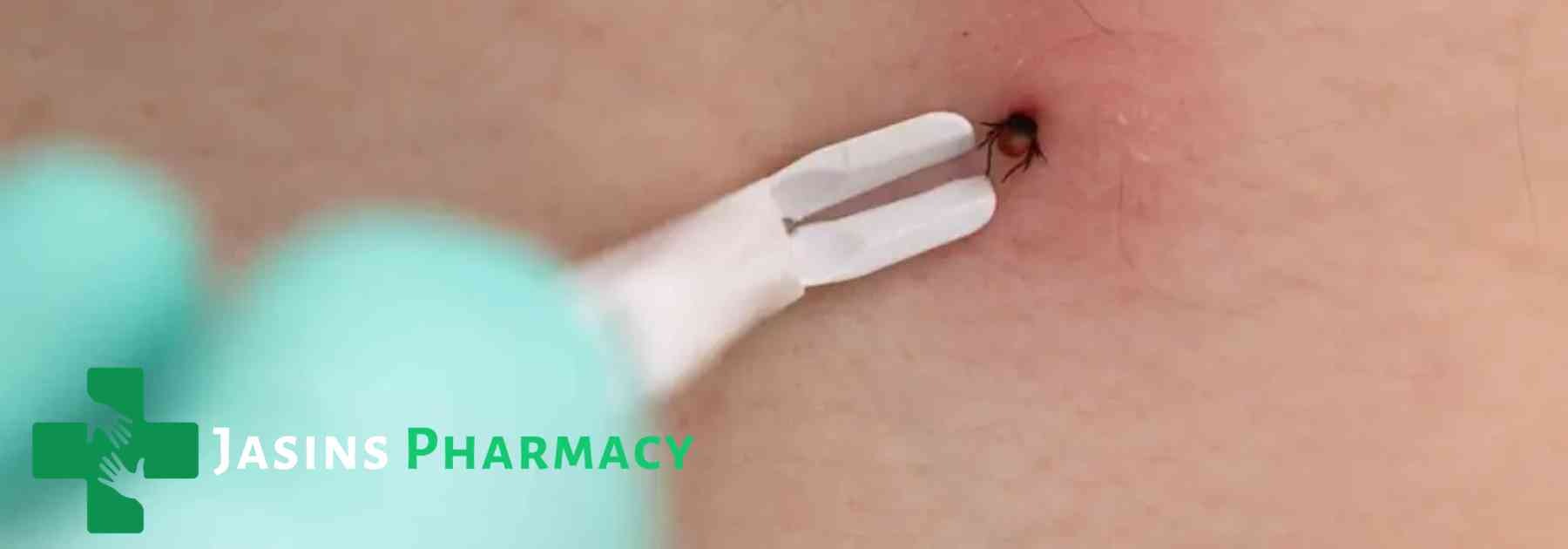
Step-By-Step Guide: How to Use a Tick Removal Tool
First, remain calm and ensure good lighting so you can clearly see the tick. Wash your hands and, if available, put on disposable gloves.
Position the tick removal tool so that the notch slides gently underneath the tick, as close to the skin as possible. Once the tool is securely in place, lift the tick steadily upward or rotate gently according to the manufacturer’s instructions until it detaches.
Avoid jerking or squeezing the tick’s body. After removal, clean the area thoroughly with antiseptic and wash your hands again.
If you are unsure about correct technique, contact us for guidance from our pharmacy team in Hounslow.
What to Do After Removing a Tick
Once the tick has been removed, dispose of it safely by placing it in tissue and discarding it. Do not crush it with your fingers.
Keep an eye on the bite site for several weeks. If you notice a spreading red rash, flu-like symptoms, or unusual fatigue, seek medical advice promptly.
If you are planning to travel to areas where tick-borne illnesses are more common, consider booking a consultation at our travel clinic for personalised advice and preventative guidance.
Common Tick Removal Mistakes
One common mistake is attempting to burn the tick or apply nail varnish, alcohol, or oils. These methods are not recommended and may increase infection risk.
Another mistake is pulling too quickly or using inappropriate tools. A proper tick removal tool reduces the risk of leaving parts embedded in the skin.

When Should You Seek Medical Advice?
Most tick bites do not cause serious problems if handled correctly. However, you should seek medical advice if the bite area becomes increasingly red, swollen, or painful.
Symptoms such as fever, headaches, joint pain, or a circular rash around the bite may indicate infection. Call us if you are unsure whether further assessment is required.
Frequently Asked Questions
Here are answers to some of the most frequently asked questions about how to use a tick removal tool.
Can I use normal tweezers instead?
Fine-tipped tweezers can sometimes be used if positioned correctly. However, a tick removal tool is specifically designed to reduce squeezing and improve safety.
Does removing a tick quickly reduce infection risk?
Yes, prompt removal lowers the chance of bacteria being transmitted. Early action is important.
Should I twist or pull straight up?
Follow the instructions provided with your specific tool. Some tools require gentle rotation, while others use steady upward pressure.
Is it normal for the area to be slightly red?
Mild redness immediately after removal can be normal. Persistent or expanding redness should be checked.
Can children use a tick removal tool?
An adult should perform the removal on a child. Proper technique is important to ensure complete removal.
How long should I monitor the bite site?
Monitor the area for several weeks. Any unusual symptoms during this time should prompt medical advice.
Stay Prepared and Protected
Confidence in using a tick removal tool ensures you can respond swiftly and safely if required. Proper removal, good hygiene, and monitoring symptoms help reduce the risk of complications.
Our team at Jasins Pharmacy in Hounslow offers tick removal tools and helpful advice if you need assistance after a bite. Book now to ensure you are fully prepared and know exactly what to do.
Disclaimer: This article is for informational purposes only. Always speak to a qualified medical professional before starting any treatment or if you are concerned about symptoms following a tick bite.

This blog was written on behalf of Jasins Pharmacy by Pharmacy Mentor.