
Jasins Pharmacy
Malaria prevention for travellers relies on the right combination of antimalarial medication and insect bite avoidance. Atovaquone/proguanil (Malarone), doxycycline, and mefloquine are the three antimalarial medications most commonly prescribed for UK travellers visiting malaria-risk destinations. The most appropriate choice depends on your destination, the duration of your trip, your medical history, and your personal circumstances. A professional travel health consultation is essential before starting any antimalarial medication. Private malaria consultations and prescriptions are available at Jasins Pharmacy in Hounslow with no GP referral required.
Key Takeaways
- Malaria is a potentially life-threatening disease present in over 100 countries, and UK travellers have no natural immunity regardless of how many trips they have made to endemic regions.
- The three main antimalarial medications prescribed in the UK are atovaquone/proguanil (Malarone), doxycycline, and mefloquine, each with a different dosing schedule, side effect profile, and suitability criteria.
- Choosing the right antimalarial depends on your destination, the duration of your trip, your medical history, and any contraindications, making a professional travel health consultation essential before starting any medication.
- Timing matters: Malarone and doxycycline should be started one to two days before travel, while mefloquine must be started two to three weeks before departure to allow time to check for side effects.
- Completing the full post-travel course is just as important as taking medication during your trip, as malaria can develop weeks after returning home if tablets are stopped too early.
- Private malaria consultations and prescriptions are available at Jasins Pharmacy in Hounslow with no GP referral required.
Malaria is a serious and potentially life-threatening disease that affects travellers visiting large parts of sub-Saharan Africa, South and Southeast Asia, Latin America, and other endemic regions. Unlike many travel health risks, malaria has no vaccine available for routine use by UK travellers, meaning protection relies entirely on antimalarial medication taken before, during, and after travel, combined with consistent mosquito bite avoidance measures. Seeking personalised travel advice before visiting any malaria-endemic region is one of the most important steps a traveller can take. This guide covers everything you need to know, including the medication options available, how to choose the right tablets for your destination and health profile, when to start and finish treatment, what side effects to expect, and how to reduce your risk further through effective bite avoidance.
Book your malaria prevention consultation at Jasins Pharmacy in Hounslow today with no GP referral required.
What is Malaria and Why Is It So Serious?
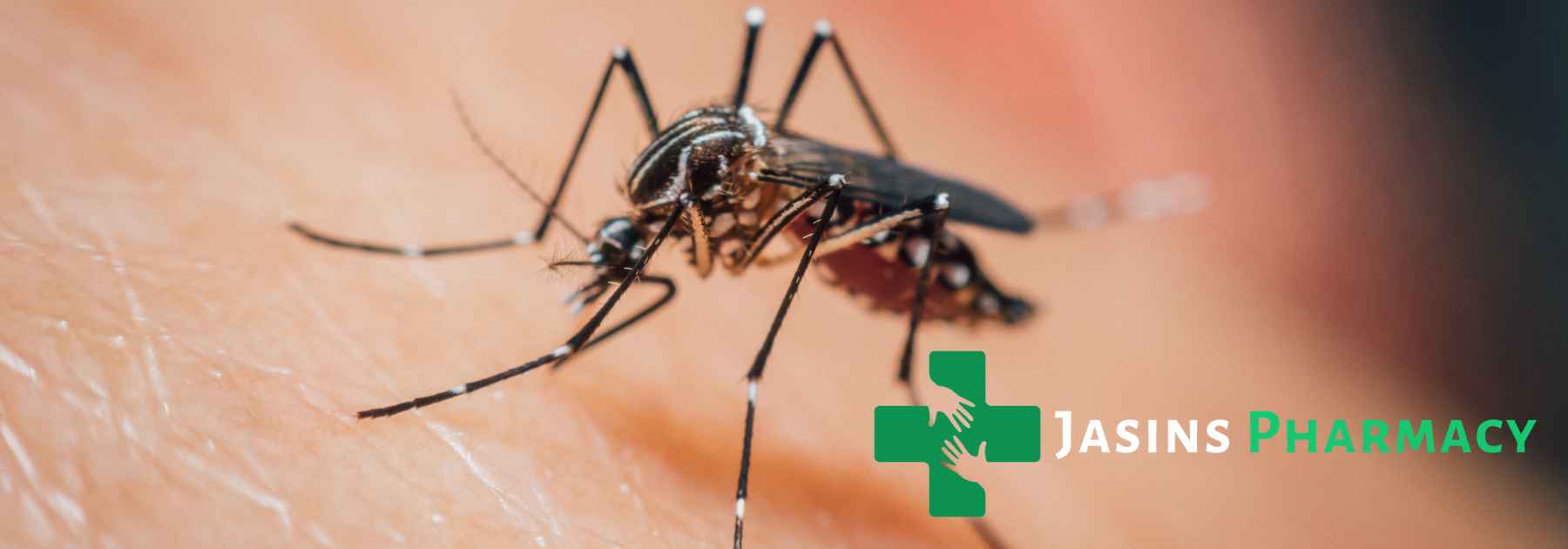
Malaria is caused by Plasmodium parasites transmitted to humans through the bite of infected female Anopheles mosquitoes. Five species of Plasmodium are known to infect humans, but Plasmodium falciparum is the most dangerous, responsible for the most severe and potentially fatal form of the disease. It predominates in sub-Saharan Africa, where the majority of global malaria deaths occur.
The disease begins with a non-specific febrile illness that can be easily mistaken for influenza or a standard viral infection. Early symptoms include fever, chills, sweating, headache, muscle aches, nausea, and fatigue. Without prompt diagnosis and treatment, falciparum malaria can progress rapidly to severe disease involving cerebral malaria, acute respiratory distress syndrome, severe anaemia, kidney failure, and death. The speed of deterioration in untreated falciparum malaria is one of its most dangerous characteristics. A traveller who develops a fever within a year of returning from a malaria-endemic region should seek urgent medical attention and specifically inform the healthcare team of their travel history.
UK travellers have no natural immunity to malaria, regardless of how many trips they have made to endemic regions. Previous exposure does not confer protection, and the risk exists on every trip to an endemic destination. This is why seeking personalised travel health advice before visiting any malaria-risk area is so important. Whether antimalarial medication is recommended depends on the specific destination, the local level of risk, and an individual clinical assessment, which is why a consultation with a qualified pharmacist or healthcare professional before travel is always the right starting point.
Which Destinations Carry a Malaria Risk?
Malaria is present in over 100 countries worldwide, but the risk varies enormously between regions, countries, and even specific areas within a single country. Understanding which destinations carry the highest risk is an important starting point for malaria prevention planning.
Sub-Saharan Africa
Sub-Saharan Africa carries the highest global malaria burden and represents the greatest risk for UK travellers. Plasmodium falciparum is the predominant species across the region, and transmission can occur year-round in many countries. Popular travel destinations including Kenya, Tanzania, Ghana, Nigeria, Uganda, Ethiopia, Zambia, Zimbabwe, Mozambique, and Senegal all carry a significant malaria risk. Even South Africa carries a malaria risk in the Kruger National Park and Limpopo province. Antimalarial medication is strongly recommended for all travellers to sub-Saharan Africa visiting risk areas.
South Asia
Malaria is present across South Asia, including India, Pakistan, Bangladesh, Nepal, and Sri Lanka. The risk in South Asia is generally lower than in sub-Saharan Africa and varies considerably between urban and rural areas. Plasmodium vivax is more prevalent in parts of South Asia than falciparum, though falciparum transmission does occur. The specific risk depends heavily on the destinations and activities planned, and a destination-specific consultation is particularly important for travellers to this region.
Southeast Asia
Malaria risk in Southeast Asia is concentrated in rural and forested areas, with cities and popular tourist destinations generally considered low risk. Countries with significant rural malaria transmission include Cambodia, Myanmar, parts of Thailand, Vietnam, Indonesia, and the Philippines. Drug-resistant strains of Plasmodium falciparum have been documented in parts of Southeast Asia, particularly along the border regions of Cambodia, Thailand, and Myanmar, which has important implications for antimalarial drug selection.
Latin America
Malaria is present across much of Latin America, with the highest risk in the Amazon basin regions of Brazil, Peru, Colombia, Bolivia, and Ecuador. Most Latin American malaria is caused by Plasmodium vivax, which is less likely to cause life-threatening disease than falciparum but still requires treatment and prevention. Falciparum malaria does occur in some areas, particularly in parts of Brazil and Colombia.
Contact us to book a malaria prevention consultation at Jasins Pharmacy in Hounslow. Our pharmacists will identify the right antimalarial for your trip and arrange your prescription.
Antimalarial Medication Options
Three antimalarial medications are commonly prescribed for UK travellers. Each has a different mechanism of action, dosing schedule, suitability profile, and side effect pattern. The most appropriate choice for any individual traveller depends on a range of factors that must be assessed during a professional consultation.
Atovaquone/Proguanil (Malarone)
Atovaquone/proguanil, sold under the brand name Malarone, is currently the most widely prescribed antimalarial for UK travellers and is the preferred choice for many destinations. It works by disrupting the mitochondrial function and folate synthesis of the malaria parasite, making it effective against both the liver and blood stages of the disease.
Malarone is taken as a single tablet once daily, starting one to two days before entering a malaria risk area and continuing for seven days after leaving. This short post-travel course is one of its key advantages, making it particularly well suited to shorter trips where a four-week post-travel course would represent a significant proportion of the total tablet-taking period. It is generally well tolerated, with the most common side effects being mild gastrointestinal symptoms including nausea and abdominal discomfort, which can be reduced by taking the tablet with food.
Malarone is not recommended for people with severe kidney impairment and is not currently recommended during pregnancy or breastfeeding due to limited safety data. It is suitable for children and is available in a paediatric formulation. The cost of Malarone is higher than doxycycline, which is worth considering for travellers planning extended trips.
Doxycycline
Doxycycline is a broad-spectrum antibiotic that also has antimalarial properties, and it is the most cost-effective of the three main options, making it a popular choice for longer trips. It works by inhibiting protein synthesis in the malaria parasite and is effective against a wide range of malaria strains, including drug-resistant falciparum.
Doxycycline is taken once daily, starting one to two days before travel and continuing for four weeks after returning from the malaria risk area. This extended post-travel course is important and must be completed in full to ensure any parasites incubating in the liver at the time of return are cleared before they can enter the bloodstream.
The most significant side effect associated with doxycycline is photosensitivity, meaning an increased susceptibility to sunburn when exposed to sunlight. This is a particularly important consideration for travellers spending time in hot, sunny destinations. High-factor sun protection and protective clothing are essential for anyone taking doxycycline. Other potential side effects include nausea and gastrointestinal discomfort, which can be reduced by taking the tablet with food and a full glass of water, and oesophageal irritation if tablets are swallowed without adequate fluid or while lying down. Doxycycline is not suitable for pregnant women or children under twelve years of age.
Mefloquine (Lariam)
Mefloquine, sold under the brand name Lariam, is taken once weekly and is therefore sometimes preferred by travellers who find daily tablet-taking difficult to maintain. It must be started two to three weeks before travel, which allows time to identify any significant side effects before departure and also establishes protective blood levels well in advance of entering a malaria risk area.
Mefloquine is not appropriate for everyone. It has a well-documented association with neuropsychiatric side effects including vivid or disturbing dreams, anxiety, depression, dizziness, and in rare cases more serious psychiatric reactions. It is contraindicated for individuals with a history of psychiatric illness, seizures, or certain cardiac conduction abnormalities. The extended two-week pre-travel start period is partly designed to allow any neuropsychiatric side effects to become apparent before the traveller is abroad and potentially far from medical care.
For travellers without contraindications who are comfortable with the weekly dosing schedule, mefloquine remains an effective option for destinations including parts of sub-Saharan Africa and Southeast Asia. A thorough medical history review is particularly important before prescribing mefloquine, and our pharmacists at Jasins Pharmacy will conduct a careful assessment of suitability during your consultation.
| Medication | Dosing | Start | After Return | Key Notes |
|---|---|---|---|---|
| Malarone | Daily | 1-2 days before | 7 days | Take with food; not in severe kidney disease |
| Doxycycline | Daily | 1-2 days before | 4 weeks | Causes photosensitivity; not in pregnancy or under 12s |
| Mefloquine | Weekly | 2-3 weeks before | 4 weeks | Not in psychiatric history; neuropsychiatric side effects possible |

Choosing the Right Malaria Tablets for Your Trip
Selecting the most appropriate antimalarial is not a one-size-fits-all decision. With several types of malaria tablets available, each suited to different destinations, trip durations, and health profiles, a number of factors need to be considered together to identify the safest and most practical option for any individual traveller.
Destination and Drug Resistance
Drug resistance patterns vary between regions and directly influence which antimalarial is most appropriate. Chloroquine-resistant Plasmodium falciparum is now present in virtually all malaria-endemic regions, meaning chloroquine alone is no longer recommended for most travellers. In parts of Southeast Asia, particularly along the Thailand-Cambodia-Myanmar border, multidrug resistance including resistance to mefloquine has been documented, making atovaquone/proguanil or doxycycline the preferred choices. NaTHNaC destination-specific guidance should always be reviewed during the consultation to ensure the selected medication is appropriate for the exact areas to be visited.
Duration of Travel
The length of the trip influences the choice of antimalarial in practical terms. For shorter trips of up to three weeks, the short post-travel course of Malarone makes it an efficient and convenient option. For longer trips, the cost of Malarone over an extended period may make doxycycline a more practical choice from a financial standpoint, provided the traveller has no contraindications and is prepared to manage the photosensitivity side effect carefully.
Medical History and Contraindications
Each antimalarial has specific contraindications that must be assessed before a prescription is issued. Mefloquine is contraindicated in individuals with a history of depression, anxiety disorders, psychosis, or seizures. Doxycycline is contraindicated in pregnancy and in children under twelve. Malarone is not appropriate in severe renal impairment. Individuals taking other medications must have potential drug interactions reviewed. Our pharmacists at Jasins Pharmacy in Hounslow will take a thorough medical history during your consultation to identify any relevant contraindications and select the most suitable option.
Pregnancy and Breastfeeding
Malaria in pregnancy carries serious risks to both mother and baby, and ideally travel to high-risk malaria regions should be avoided during pregnancy. Where travel is unavoidable, specialist advice is essential. Doxycycline and mefloquine are not recommended during pregnancy. Atovaquone/proguanil has limited safety data in pregnancy and should only be used where clearly necessary after specialist advice. Chloroquine with proguanil may be considered for destinations where this combination remains effective, but its suitability must be confirmed with a healthcare professional.
Children
Children can take antimalarials but dosing depends on age and weight. Malarone is available in a paediatric formulation suitable for children weighing at least 11kg. Doxycycline is not suitable for children under twelve. Mefloquine can be used in children but dosing must be weight-based and carefully calculated. Our pharmacists will advise on the most appropriate option and correct dosing for children during your consultation.
Call us to discuss your travel plans and ensure you receive the most suitable malaria tablets for your destination.
When to Start and Finish Your Antimalarials
Correct timing of antimalarial medication is critical to its effectiveness. Starting too late, stopping too early, or missing doses all reduce the protection provided and leave travellers vulnerable to infection.
When to Start
The start date depends on the medication chosen. Malarone and doxycycline should be started one to two days before entering a malaria risk area. This allows protective levels to build in the bloodstream before the first potential exposure. Mefloquine requires a longer lead time of two to three weeks before travel, both to establish adequate blood levels and to allow time to identify any significant side effects before departure. Starting mefloquine well in advance of travel is strongly advisable and a practical reason to book your malaria consultation as early as possible.
During Travel
Antimalarials must be taken consistently and exactly as directed throughout the entire period spent in a malaria risk area. Missing doses or taking tablets at irregular intervals significantly reduces their effectiveness. For daily medications, taking the tablet at the same time each day helps establish a routine that makes missed doses less likely. If a dose of Malarone or doxycycline is missed, take it as soon as you remember and continue the course. If you miss a weekly mefloquine dose, seek advice from a pharmacist on the correct course of action.
After Returning Home
Completing the full post-travel course is just as important as taking the medication during your trip. The reason the post-travel course is required varies between medications. Atovaquone/proguanil acts on developing liver stages of the parasite, which is why only a short seven-day post-travel course is needed after leaving the risk area. Doxycycline and mefloquine act primarily on blood-stage parasites, meaning a longer post-travel course of four weeks is required to cover the period during which parasites may still be entering the bloodstream after exposure. It is worth noting that dormant liver-stage parasites, known as hypnozoites, are associated specifically with Plasmodium vivax and Plasmodium ovale and are not cleared by routine prophylaxis. Travellers returning from areas where these species are present may require additional treatment if a vivax or orale infection develops despite completing their antimalarial course. Stopping any antimalarial course early is a common mistake that can result in malaria developing weeks after returning home, at a point when the connection to recent travel may not be immediately apparent to either the traveller or the treating clinician.
Protecting your health abroad involves more than one precaution. Enter your destination below for a quick overview of the travel vaccines and prevention measures commonly recommended for your trip, then book a consultation with our team at Jasins Pharmacy in Hounslow for personalised advice before you travel:
Mosquito Bite Avoidance
Antimalarial medication significantly reduces the risk of malaria but does not eliminate it entirely. No medication offers 100% protection, which is why consistent mosquito bite avoidance throughout your trip is an essential complement to chemoprophylaxis. The Anopheles mosquitoes that transmit malaria are most active between dusk and dawn, making evening and overnight precautions particularly important.
Effective bite avoidance measures include:
- Applying a DEET-based insect repellent to all exposed skin, ideally at a concentration of 50% for high-risk areas, and reapplying after swimming or heavy sweating
- Wearing loose-fitting long-sleeved clothing and long trousers from dusk onwards, when Anopheles mosquitoes are most active
- Sleeping under a permethrin-treated mosquito net, even in accommodation with windows and screens, as nets provide an important additional barrier
- Using air conditioning or fans where available, as mosquitoes are less active in cool, moving air
- Treating clothing, nets and gear with permethrin for extended stays in high-risk areas, as this significantly increases the effectiveness of physical barriers
- Avoiding outdoor activities in shaded areas near standing water at dusk and dawn in high-risk environments where possible
Combining rigorous bite avoidance with consistent antimalarial medication gives travellers the strongest possible protection against malaria. Neither approach alone is sufficient, and both should be maintained throughout the entire period spent in a risk area.

Frequently Asked Questions
Below are answers to common questions about choosing the right malaria tablets for travel.
Do I need malaria tablets for every country I visit?
No. Malaria risk varies enormously between countries and even between specific regions within a single country. A travel health consultation will confirm whether antimalarial medication is recommended for your specific itinerary and destinations.
Are malaria tablets 100% effective?
No antimalarial medication offers complete protection against malaria. This is why consistent mosquito bite avoidance measures must be maintained throughout your trip alongside any medication prescribed.
What should I do if I miss a dose?
For daily medications, take the missed dose as soon as you remember and continue the course as normal. If you miss a weekly mefloquine dose, speak to a pharmacist for specific guidance, as the correct action depends on how close to the missed dose you are when you remember.
Can children take malaria tablets?
Yes, but the appropriate medication and dose depend on the child’s age and weight. Our pharmacists at Jasins Pharmacy in Hounslow will advise on the most suitable option and calculate the correct dose for your child during your consultation.
When should I book my malaria consultation?
Booking at least four to six weeks before travel is strongly advisable, as this allows adequate time to start mefloquine at the required two to three weeks before departure and to arrange any other travel vaccinations needed. Earlier is always better, but consultations can be arranged at shorter notice if needed.
What if I develop a fever after returning from a malaria risk area?
Seek urgent medical attention immediately and specifically inform the healthcare team that you have recently visited a malaria-endemic region. Malaria can develop up to a year after returning home in some cases, and early diagnosis and treatment are essential.
Book Your Malaria Consultation Today
Jasins Pharmacy in Hounslow offers private malaria prevention consultations and prescriptions as part of a comprehensive travel health service. No GP referral is required, and our experienced pharmacists will identify the right antimalarial for your trip, advise on timing and side effects, and ensure you have everything you need before departure.
Book now to make sure you are fully prepared for your upcoming trip.
Disclaimer: This article is for informational purposes only. Always speak to a qualified medical professional before starting any prescription medication or travel health treatment.

